
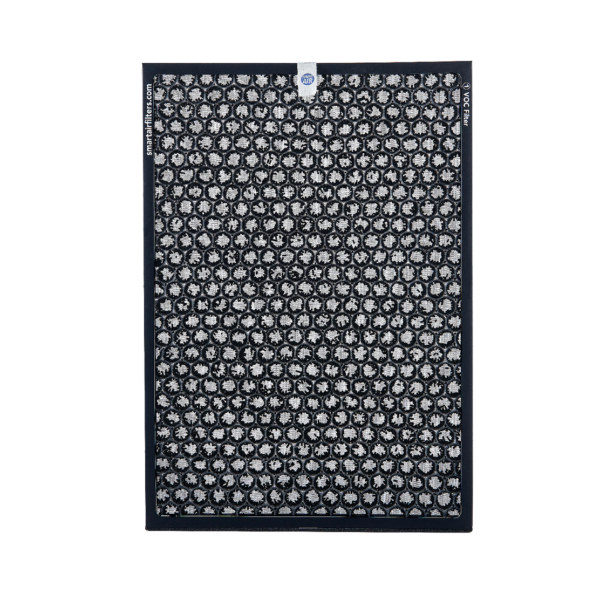

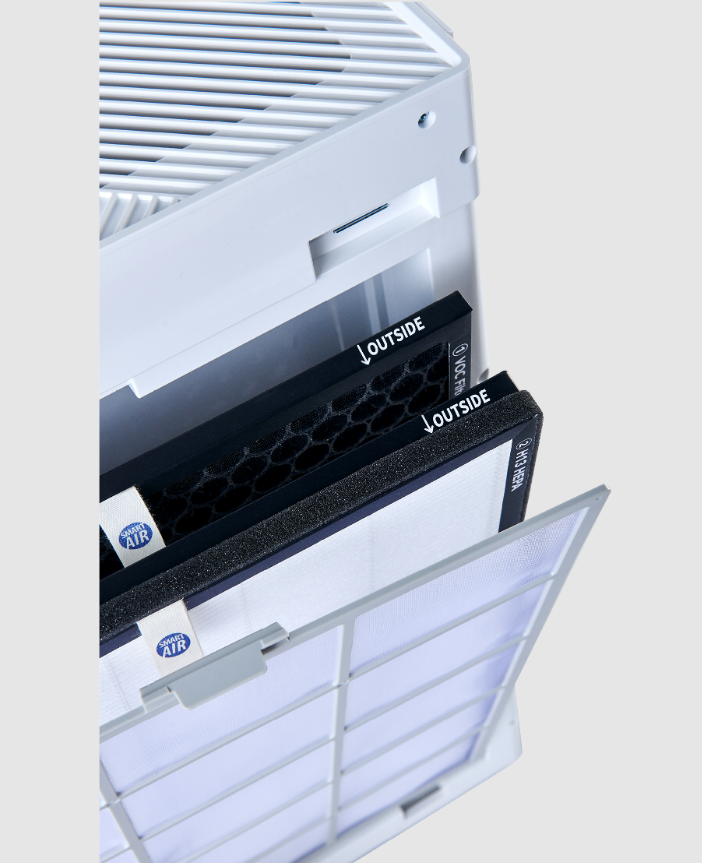
Description
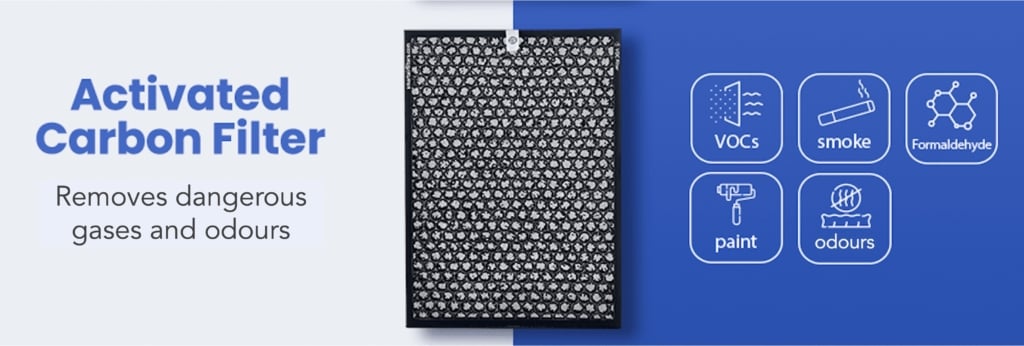
Carbon Filter - FAQs
How do I know when to change my carbon filter?
Carbon filter lifespan is very difficult to predict as every house has differing levels of background VOCs.
As such, we recommend what we call the “smell test” to know when to replace a carbon filter. To run your smell test:
- Open your purifier and remove the carbon filter
- Hold the middle of the carbon filter up to your nose (within 1-3cm) and smell the carbon filter
- If you smell a sour, acidic or chemical smell, then this means your carbon filter is saturated and should be replaced.
Perform the above 3 steps on a regular basis (every 1-2 weeks) to tell when to replace your carbon filter.
What’s the difference between pellet-style and foam-style carbon filters?
What’s important for a carbon filter is
a) the total weight of carbon used (increases the lifespan)
b) the total area of carbon available (increases the CADR)
So foam style carbon filters may well have a higher CADR short term, but a drastically reduced lifespan. Another ‘pro’ is lower air resistance, which allows more air through. But this is at the detriment of lifespan and possibly CADR.
NOTE: above CADR all refer to f-CADR or ‘formaldehyde CADR’. That is, CADR for VOCs not p-CADR (CADR for particulates/PM2.5).
Are carbon filters recyclable?
Theoretically, carbon filters can be reactivated, but reactivation requires a high temperature (600-900ºC), making it impractical.
If you want to utilise or dispose of carbon filters in a more environmentally friendly way, you can first disassemble the filter, then take out the activated carbon particles and dispose of them separately. You can also check if the local recycling plant offers activated carbon recycling.
Activated charcoal is also helpful (if not heavily polluted) for growing flowers and vegetables (it helps to control the soil humidity and pH).
Delivery Information
Warranty
No warranty information available.