
Description
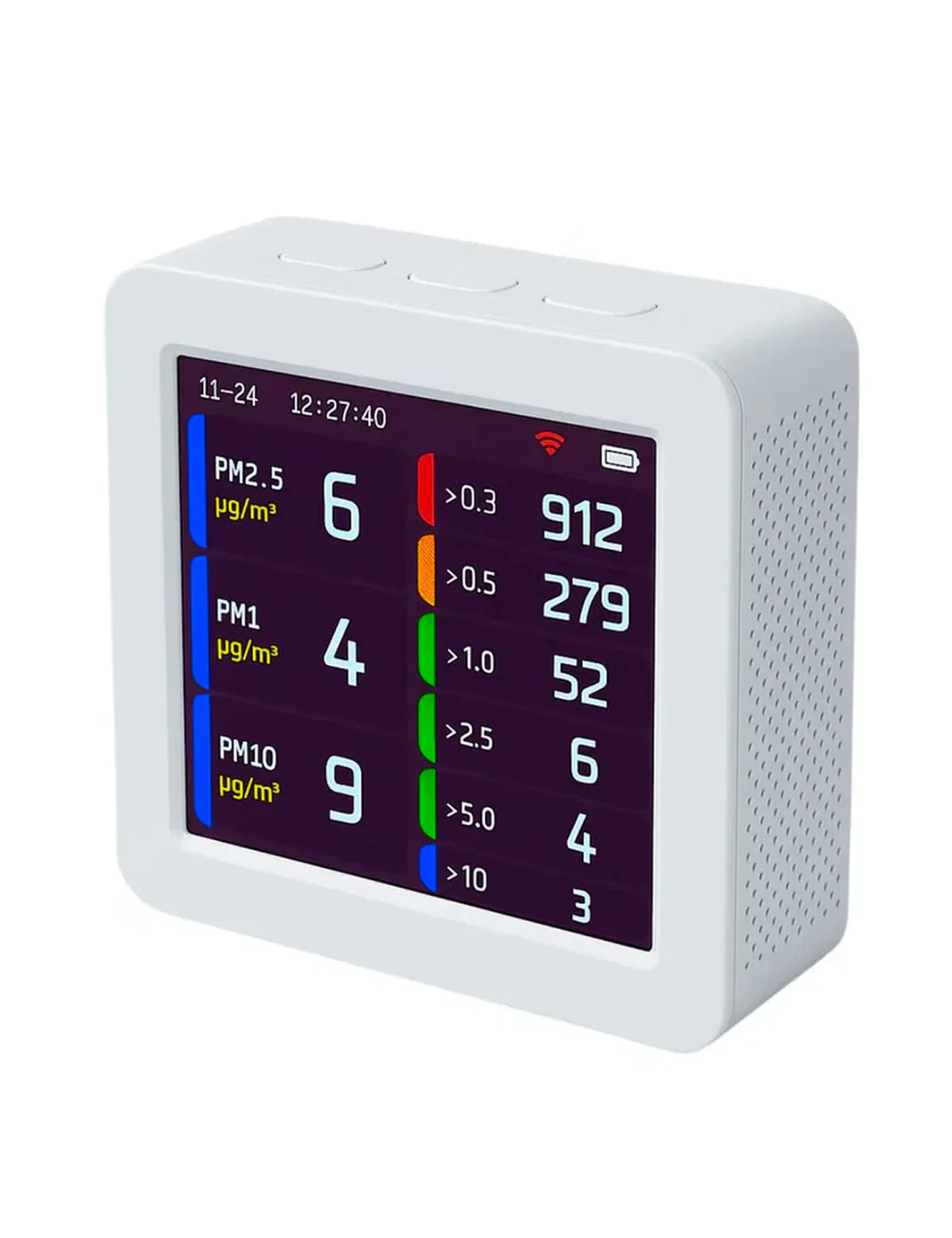
This monitor displays both particle count and particulate mass (PM) to give a fuller picture of your air than standard PM-only monitors. PM shows the total weight of particles, but weight alone can miss huge numbers of sub-micron particles small enough to enter the lungs and bloodstream. Particle count shows how many particles are present, even when PM looks low.
If PM2.5 appears low but particle count is high, the air may still contain millions of tiny particles that don't register as mass. For everyday use, PM helps with compliance and general air quality, while particle count is better for spotting trends, indoor sources, and changes in real time.
The particle counter is designed for trend detection, not regulatory accuracy. Like all consumer particle counters, it has a margin of error and is sensitive to humidity and airflow. Its job is simple: reveal relative change. When you cook, ventilate, open a window, or run an air purifier, you'll see the shifts immediately.
It's ideal for identifying spikes in sub-micron particles when PM values remain low.
Understanding the data
- 0.3 µm – Sub-micron count; very fine aerosols (note: ultrafine particles are <0.1 µm)
- 0.5 µm – Sub-micron count; combustion particles and secondary aerosols
- 1 µm – Fine particle count; general respirable particles (typically the most stable channel)
- 2.5 µm – Aligns with PM2.5; smoke, combustion residue, urban pollution
- 5 µm – Coarse count; dust, fibres, larger debris
- 10 µm – Aligns with PM10; coarse dust, pollen, mechanical disturbance
Counts = how many particles are in each size range
PM values = estimated mass of all particles up to that size
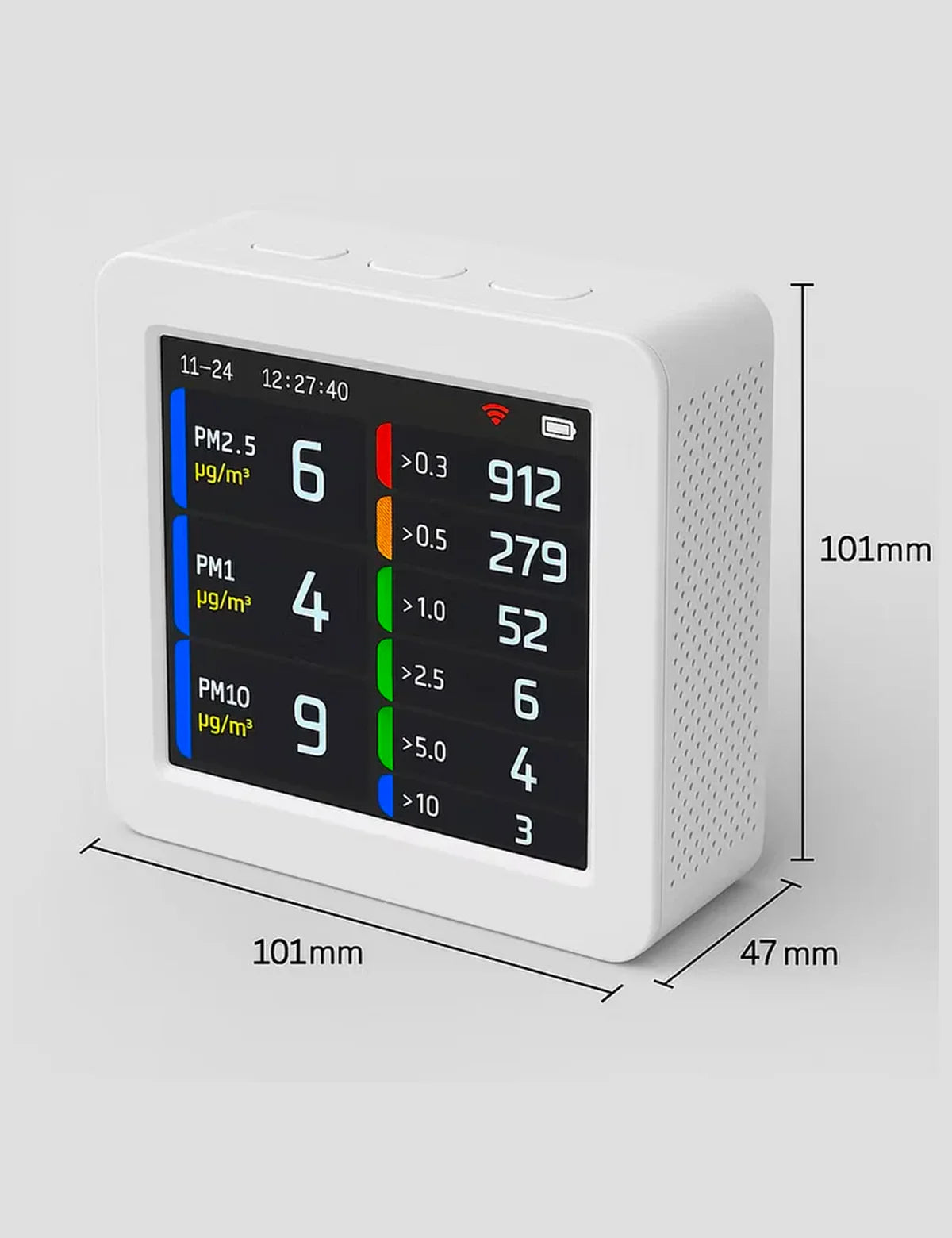
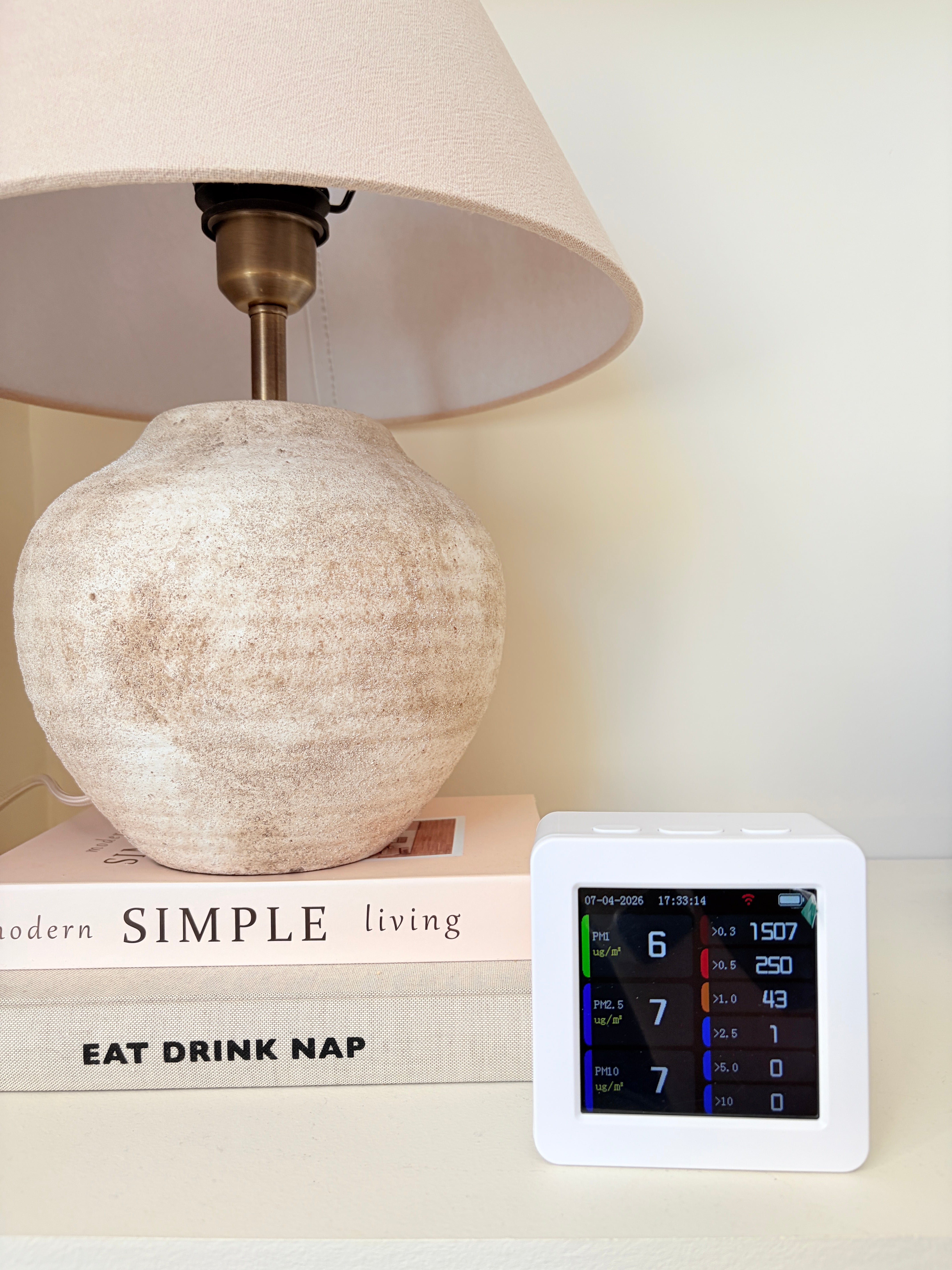
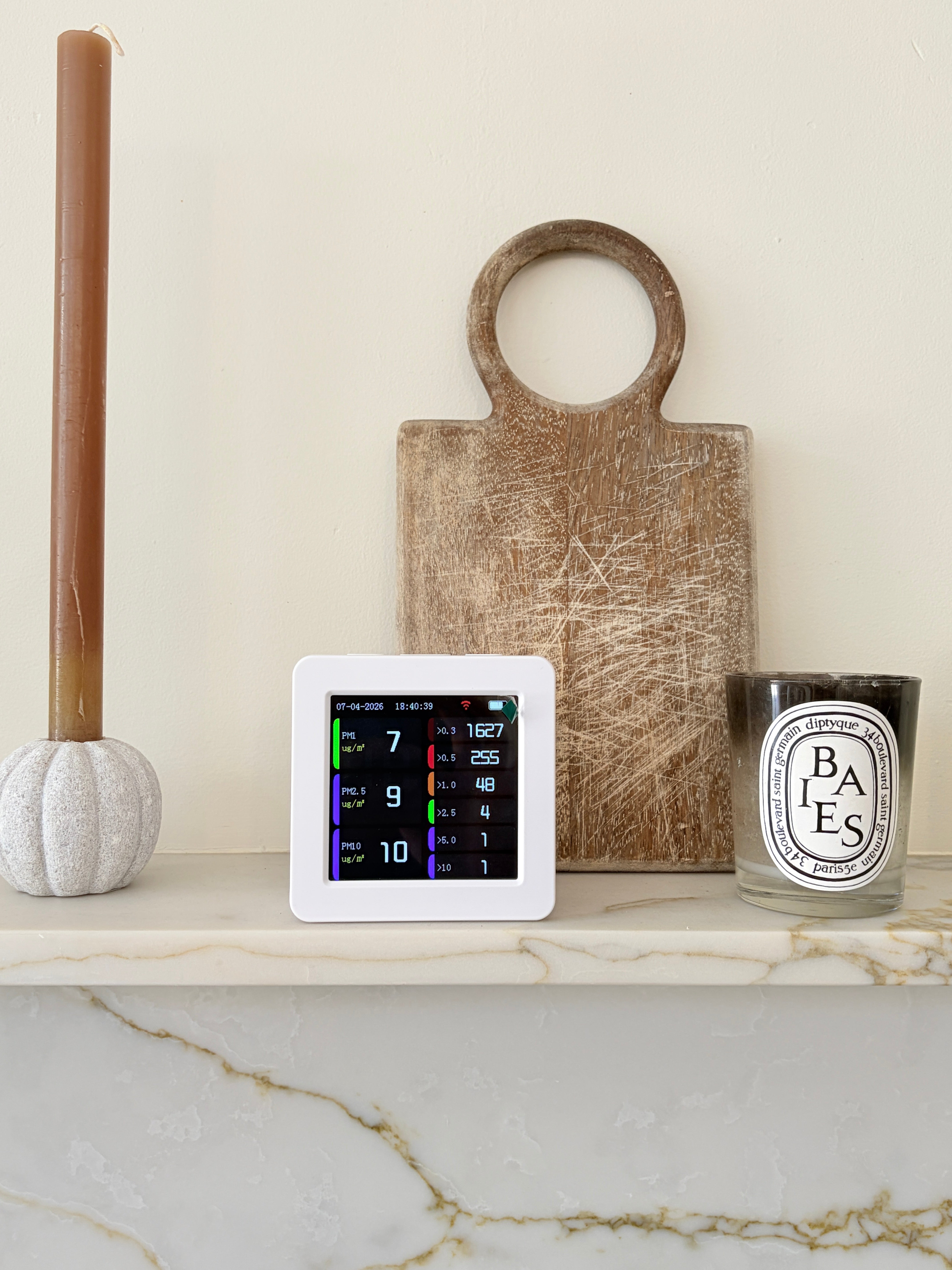
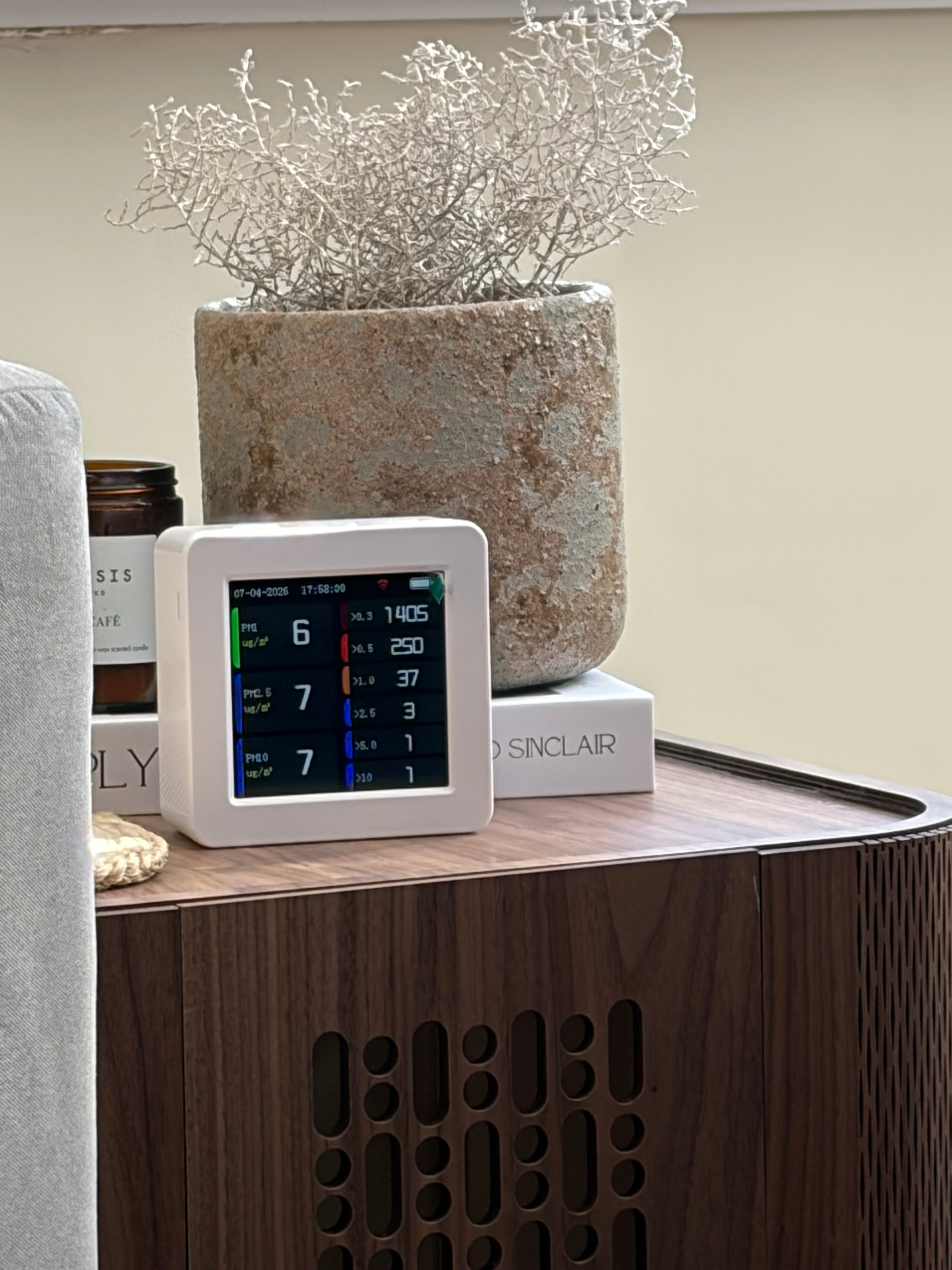
Reading the screen (examples based on the display image)
- PM10 is higher than the 10 µm count because PM10 includes all smaller particles too.
- PM2.5 can match the 2.5 µm count because larger particles dominate the mass, even if smaller ones are far more numerous but carry little weight.
- PM1 can be low because sub-micron particles contribute very little mass despite being abundant.
Key Features
- Particle count + PM mass – Dual measurement for complete air insight
- 6 size channels – 0.3µm, 0.5µm, 1µm, 2.5µm, 5µm, 10µm
- Trend detection focused – See real-time changes from cooking, ventilation, purifiers
- Portable & lightweight – Take it anywhere
- Battery powered – Perfect for spot checks and indoor air investigations
Tax & Customs
This product excludes UK sales tax but you will be required to pay EU tax (and possibly customs) on arrival. The customs is 0% for this product in the UK - while we assume it is the same for EU countries, you should check this before ordering. The customs export code is 8421392590.